Safari photography is both exhilarating and challenging. The combination of dusty conditions, bouncing vehicles, long focal lengths, and unpredictable wildlife requires specific techniques. This comprehensive guide will help you capture stunning wildlife photos, from technical camera settings to artistic composition.
Essential Camera Equipment
Camera Body
- Best Choice: DSLR or Mirrorless with fast autofocus
- Full-frame sensors handle low light better (dawn/dusk shooting)
- High ISO performance crucial (shooting in shade, forests)
- Fast continuous shooting (5+ fps minimum, 10+ fps ideal)
- Recommended Models:
- Canon: R5, R6, R7, 5D Mark IV, 7D Mark II
- Nikon: Z8, Z9, D850, D500
- Sony: A1, A9 II, A7 IV
- Bring a Backup: Camera failures happen (dust, heat, Murphy's Law)
Lenses for Safari
Telephoto Zoom (Essential)
- Focal Length: 100-400mm, 150-600mm, 200-600mm
- You NEED reach - animals often 20-100 meters away
- Longer better than shorter (crop in post, but can't zoom out!)
- Must Have: Image Stabilization (IS/VR/OSS)
- Essential for shooting from moving vehicles
- Allows 2-3 stops slower shutter speeds
- Budget Options:
- Canon RF 100-400mm f/5.6-8
- Nikon 200-500mm f/5.6
- Tamron/Sigma 150-600mm f/5-6.3
- Professional Options:
- Canon RF 100-500mm f/4.5-7.1 L
- Sony 200-600mm f/5.6-6.3 G
- Nikon Z 180-600mm f/5.6-6.3
Mid-Range Zoom (Recommended)
- Focal Length: 24-70mm or 24-105mm
- Use Cases: Landscapes, close wildlife, environmental shots, lodge photos
Wide-Angle (Optional)
- Focal Length: 16-35mm
- Use Cases: Dramatic landscapes, environmental portraits, creative shots
Essential Accessories
- Beanbag: Most important accessory for vehicle shooting
- Provides stable platform on vehicle door/window frame
- Bring empty bag, fill with rice/beans at destination
- DIY: Large ziplock bag filled works too
- Memory Cards: Multiple high-speed cards (64GB-256GB each)
- Expect 500-1,000+ photos per day
- Bring more than you think you need
- Use backup card slot if camera has dual slots
- Extra Batteries: Minimum 4-5 batteries
- Charging opportunities limited in bush camps
- Cold mornings drain batteries faster
- Continuous shooting drains quickly
- Lens Cleaning Kit: Blower, microfiber cloths, lens pen
- Dust is constant - you'll clean lenses multiple times daily
- Never wipe lens without blowing first (scratch risk)
- Camera Bag: Padded, dust-resistant
- Must fit on safari vehicle floor
- Consider backpack style (easier to carry)
- Rain Cover: Even in dry season, surprise rain happens
Camera Settings for Safari
Shooting Mode
- Aperture Priority (Av/A): Best starting mode
- You control aperture (depth of field)
- Camera selects shutter speed
- Set Auto ISO with minimum shutter speed rule
- Manual Mode (M): For advanced photographers
- Full control over exposure triangle
- Use when lighting consistent
- Still use Auto ISO for flexibility
- Avoid Program/Auto Modes: You need control for wildlife
The Exposure Triangle for Wildlife
Shutter Speed (Most Important for Action)
- Minimum for Sharp Photos: 1/(focal length x 2)
- 400mm lens = 1/800s minimum
- 600mm lens = 1/1250s minimum
- Image stabilization helps but don't rely on it
- For Walking Animals: 1/1000s minimum
- For Running Animals: 1/2000s - 1/4000s
- For Birds in Flight: 1/2000s - 1/4000s
- For Panning Motion: 1/60s - 1/250s (creative technique)
Aperture (Depth of Field)
- Wide Open (f/5.6-f/8): Standard safari shooting
- Isolates subject from background
- Allows faster shutter speeds
- Good for single animals
- Moderate (f/8-f/11): For groups
- More depth of field
- Keeps multiple animals sharp
- Pride of lions, elephant herds
- Tip: Telephoto lenses naturally have shallow depth of field
ISO (Light Sensitivity)
- Auto ISO Settings:
- Maximum: 3200-6400 (depends on your camera's noise performance)
- Minimum Shutter Speed: 1/1000s (adjusts ISO to maintain this)
- Bright Sunlight: ISO 200-400
- Overcast/Shade: ISO 800-1600
- Dawn/Dusk: ISO 1600-3200+
- Tip: Better slightly noisy sharp photo than blurry perfect exposure
Autofocus Settings
AF Mode
- Continuous AF (AI Servo/AF-C): Essential for wildlife
- Tracks moving subjects
- Keeps focus as animal moves
- Use 99% of the time
- Single AF (One Shot/AF-S): Only for stationary subjects
AF Area Mode
- Single Point: Precise control
- Best for stationary or slow-moving animals
- You choose exact focus point
- Expanded/Zone AF: Balance of control and flexibility
- Multiple points work together
- Good for walking animals
- Wide/Auto AF: Least control
- Camera decides focus point
- Can work for birds in flight
- Risk of focusing on background
- Animal Eye AF: Game-changer on modern cameras
- Automatically finds and tracks animal eyes
- Available on newer mirrorless cameras
Drive Mode
- High-Speed Continuous: Default mode for safari
- Captures action sequences
- Increases chances of perfect moment
- Shoot in bursts (3-5 frame bursts, not continuous hold)
- Tip: Bursts are better than holding shutter down (fills card with junk)
Other Important Settings
- Image Format: RAW (not JPEG)
- Much more editing flexibility
- Can recover blown highlights/shadows
- Essential for best quality
- White Balance: Auto WB or Daylight
- Shooting RAW allows changes in post
- Back Button Focus: Separate focus from shutter
- Thumb button focuses, shutter fires
- Prevents accidental refocusing
- Takes time to learn but worth it
Composition Techniques for Wildlife
Rule of Thirds
- Place animal at intersection points (not center)
- More dynamic, interesting compositions
- Leave space in direction animal is facing/moving
Eye Focus is CRITICAL
- Eyes must be sharp: Non-negotiable rule
- Viewer connects with subject through eyes
- Out-of-focus eyes = failed photo (even if rest is sharp)
- Focus Priority: Eyes > Face > Body
- Use Animal Eye AF: If your camera has it, use it!
Perspective and Angles
- Eye Level: Best for connection
- Get down to animal's eye level when possible
- More intimate, engaging perspective
- Avoid Shooting Down: Looking down at animals less compelling
- Background Matters: Clean, uncluttered backgrounds
- Position vehicle for best background
- Wide aperture blurs distracting backgrounds
Framing and Cropping
- Leave Space: Don't crop tight in camera
- Easier to crop in post than add space
- Leave breathing room around subject
- Negative Space: Empty space can be powerful
- Emphasizes subject
- Creates mood
- Don't Cut Limbs: Avoid cropping at joints
- Looks awkward
- Crop between joints or include full limb
Capturing Behavior and Action
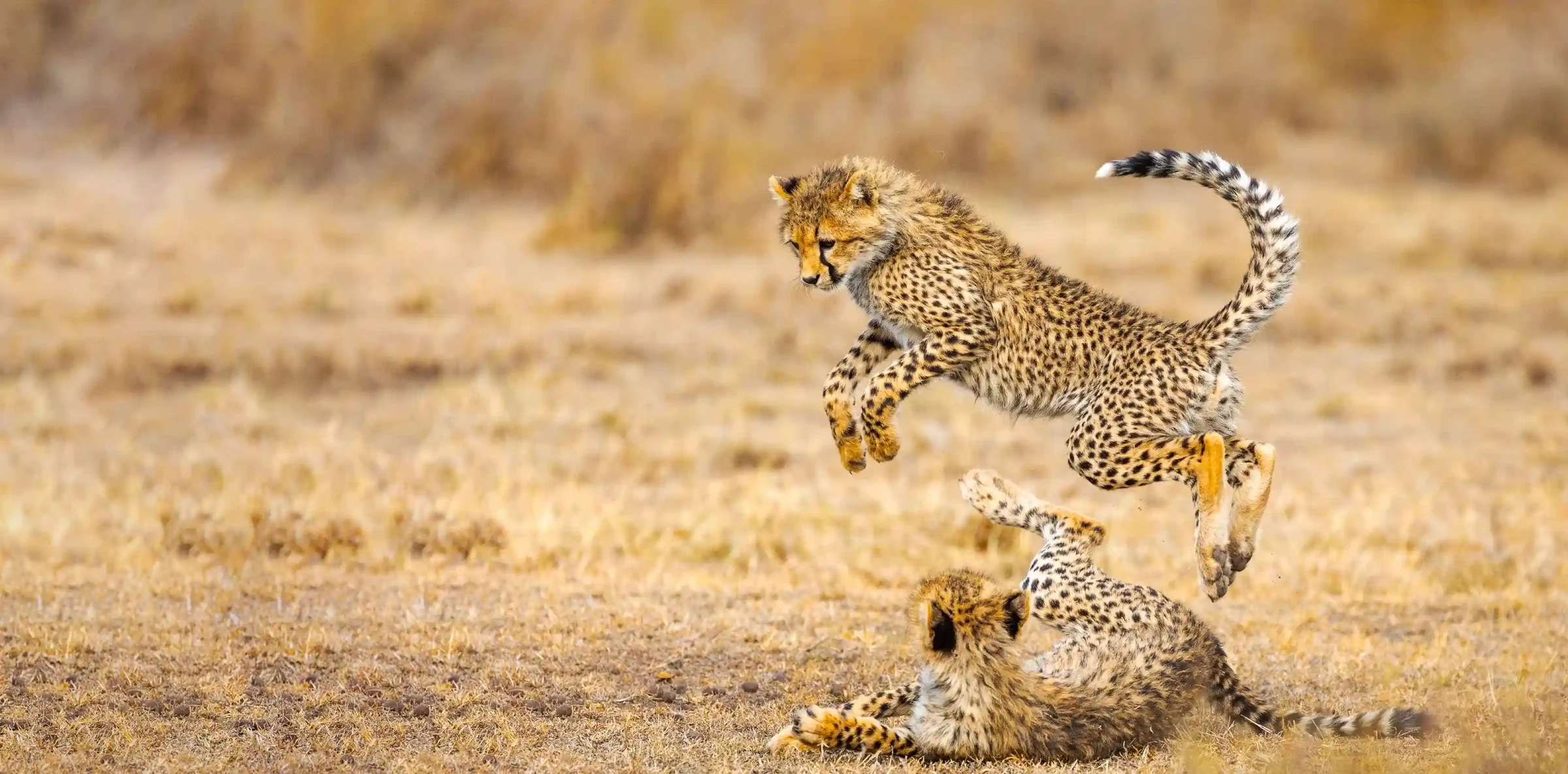
- Action Photos: Hunting, running, fighting, playing
- Most exciting shots
- Require fast shutter speeds
- Continuous shooting essential
- Interaction Photos: Animals with each other
- Mother and baby
- Playing cubs
- Grooming, nuzzling
- Portrait Photos: Face and expression
- Captivating when eyes are sharp
- Personality shines through
- Environmental Photos: Animal in landscape
- Shows habitat
- Tells broader story
- Use wider lens
Lighting for Wildlife Photography
Golden Hour is Golden
- First Hour After Sunrise: Best light of day
- Warm, soft, directional light
- Animals active
- Long shadows add dimension
- Last Hour Before Sunset: Second-best light
- Same beautiful warm quality
- Predators becoming active
- Why Golden Hour:
- Lower angle creates catchlights in eyes
- Warm tones enhance photos
- Less harsh contrast
Midday Light (Challenging)
- Problems: Harsh overhead light, deep shadows, washed-out colors
- Solutions:
- Look for animals in shade (even lighting)
- Overcast days actually better (soft light)
- Focus on portraits, details
- Shoot in open shade when possible
Backlighting (Creative Technique)
- Effect: Rim lighting, silhouettes, dramatic mood
- Expose For: Subject (accept blown background) or sky (create silhouette)
- Works Best: Sunrise/sunset
Vehicle-Based Photography Tips
Using a Beanbag
- Placement: On vehicle door, window frame, roof hatch
- Technique:
- Nestle lens into beanbag
- Don't press down (adds vibration)
- Let weight of lens rest naturally
- Stabilization: Essential for sharp images with heavy telephotos
Shooting from Moving Vehicles
- Faster Shutter Speeds: Compensate for vehicle movement
- Continuous Shooting: Some frames will be sharp
- Ask Driver: Stop or slow down for best shots
- Image Stabilization: Use it!
Window Position Matters
- Best Seats: Window seats (obviously)
- Roof Hatches: Ideal for 360° shooting, standing possible
- Rotate Positions: Fair to share best spots on multi-day safaris
Common Mistakes and How to Avoid Them
Mistake 1: Shooting Everything
- Problem: Thousands of mediocre photos
- Solution: Be selective; quality over quantity
- Ask: "Is this a unique moment or behavior?"
Mistake 2: Center Framing
- Problem: Static, boring compositions
- Solution: Use rule of thirds; create dynamic compositions
Mistake 3: Forgetting About Background
- Problem: Distracting elements, branches through subjects
- Solution: Check entire frame, not just subject; reposition if needed
Mistake 4: Too Slow Shutter Speed
- Problem: Blurry photos from camera shake or animal movement
- Solution: Follow minimum shutter speed rules; bump ISO
Mistake 5: Chimping Too Much
- Problem: Missing shots while reviewing LCD
- Solution: Quick glance to check exposure, then keep shooting
Mistake 6: Only Shooting in Perfect Light
- Problem: Missing opportunities
- Solution: Shoot in all conditions; challenge yourself
Special Situations
Birds in Flight
- Shutter Speed: 1/2000s minimum
- AF Mode: Continuous with tracking
- Technique: Track bird before shooting, follow through
- Anticipation: Watch behavior to predict takeoff
Running Animals
- Shutter Speed: 1/2000s+ for frozen action
- Panning: Or 1/125s-1/250s for motion blur background
- Continuous Shooting: Essential
- Pre-Focus: Anticipate where animal will be
Water Crossings (Great Migration)
- Priority: Fast shutter to freeze splashing water
- Composition: Capture drama and chaos
- Patience: Can wait hours for crossing to begin
Post-Processing Workflow
Organization
- Backup Immediately: Two copies minimum
- Cull Ruthlessly: Delete obvious failures
- Rate System: 5-star, flag, or color label favorites
Basic Adjustments (Lightroom/Capture One)
- Exposure: Correct overall brightness
- Highlights/Shadows: Recover detail
- White Balance: Correct color cast
- Clarity/Texture: Enhance detail (don't overdo)
- Vibrance: Boost colors subtly
- Sharpening: Essential for final output
- Noise Reduction: For high-ISO shots
Advanced Techniques
- Dodge and Burn: Lighten eyes, darken background
- Local Adjustments: Brushes, gradients for selective editing
- Cropping: Improve composition, remove distractions
Protecting Your Gear in Safari Conditions
Dust Management
- Keep Equipment Covered: When not shooting
- Don't Change Lenses: In dusty conditions if possible
- Sensor Cleaning: Might need professional cleaning after safari
- Ziplock Bags: Store gear in sealed bags
Heat Protection
- Keep in Shade: Don't leave in direct sun
- White Towel: Cover dark camera bags
- Avoid Extreme Heat: Can damage electronics
Ethical Wildlife Photography
- Never Disturb Animals: For a photo
- Respect Distance: Use telephoto, don't pressure guide to get closer
- No Baiting: Don't feed or lure animals
- Share Space: Multiple vehicles = rotate positions
- Silent Mode: If your camera has it, use it
- Patience Over Pressure: Better to miss shot than stress wildlife
Capture Your Dream Safari Photos
Join our photography-focused safaris with expert guides who understand light, angles, and animal behavior. We position vehicles for optimal shots and allow plenty of time to capture the perfect moment.