Tanzania is home to the highest concentration of wildlife in Africa. From the legendary Big Five to rare wild dogs, ancient elephants to the Great Migration, this comprehensive guide covers 50+ species you can encounter on safari, where to find them, and fascinating facts about each.
The Big Five: Africa's Most Iconic Animals
The term "Big Five" originates from big-game hunting days, referring to the five most dangerous animals to hunt on foot. Today, they're the most sought-after sightings on safari.
1. African Lion (Panthera leo)
Why They're Special: The king of beasts, apex predator, lives in prides (unlike other big cats)
- Population in Tanzania: ~15,000 lions (40% of Africa's population)
- Best Places to See: Serengeti (largest population), Ngorongoro Crater, Tarangire, Ruaha
- Best Time: Year-round, but dry season (June-October) concentrates prey
- Pride Structure: 3-30 individuals; 1-4 males, multiple related females, cubs
- Hunting: Females do 85-90% of hunting; cooperative hunters
- Daily Routine: Sleep 20 hours/day, hunt dawn/dusk, most active night
- Unique Behaviors: Male takeovers every 2-3 years, infanticide by new males
Photography Tips: Golden hour (sunrise/sunset) for best lighting; focus on eyes; capture interactions
2. African Leopard (Panthera pardus)
Why They're Special: Most elusive big cat, exceptional climbers, stunning spotted coat
- Population: Difficult to estimate (nocturnal, solitary, secretive)
- Best Places: Serengeti (Seronera Valley), Tarangire, Ruaha, Selous/Nyerere
- Best Time: Dry season when vegetation is less dense
- Behavior: Solitary except mating; territorial; mark territory with scent/claw marks
- Hunting: Opportunistic; kill prey up to 90kg; hoist kills into trees
- Tree Hoisting: Protect kills from lions/hyenas; strength to lift 50kg+ up trees
- Spotting Tips: Look in trees (often rest on branches), riverine forests, rocky outcrops
Photography Tips: Use high ISO (often in shade); telephoto lens essential; patience key
3. African Elephant (Loxodonta africana)
Why They're Special: Largest land mammals, incredible intelligence, complex social structures
- Population in Tanzania: ~60,000 elephants
- Best Places: Tarangire (largest concentration), Ruaha, Serengeti, Selous/Nyerere
- Best Time: Dry season (concentrate at water sources)
- Social Structure: Matriarchal herds led by oldest female; bulls solitary or bachelor groups
- Intelligence: Self-aware, mourn dead, use tools, long memories
- Diet: Herbivores; eat 150-300kg vegetation daily; drink 150-300 liters water
- Tusks: Both males and females have tusks (unlike Asian elephants)
- Communication: Infrasound (below human hearing); can communicate 10+ km away
Photography Tips: Capture family interactions, mud bathing, dust bathing; eyes and behavior
4. Cape Buffalo (Syncerus caffer)
Why They're Special: Considered most dangerous of Big Five; unpredictable temperament
- Population: ~250,000+ in Tanzania
- Best Places: Serengeti, Ngorongoro, Tarangire, Ruaha, Katavi (massive herds)
- Herd Size: Can form superherds of 1,000+ individuals
- Danger Factor: "Black death" - kills 200+ people annually in Africa
- Behavior: Defensive, remember threats, coordinated defense against predators
- Horns: Both sexes have horns; males have thicker "boss" (fused horn bases)
- Predation: Lions primary predators; buffalo fights can kill lions
5. Black Rhinoceros (Diceros bicornis)
Why They're Special: Critically endangered; only ~5,000 left in wild
- Population in Tanzania: ~200 individuals
- Best Places: Ngorongoro Crater (best chances), Mkomazi (sanctuary), Serengeti (rare)
- Conservation Status: Critically Endangered (poaching crisis)
- Behavior: Solitary, territorial, poor eyesight (rely on smell/hearing)
- Diet: Browsers (not grazers); pointed upper lip for plucking leaves
- Horns: Made of keratin (like fingernails); front horn longer
- Temperament: Aggressive, charge perceived threats
- Fun Fact: "Black" rhinoceros actually gray (name distinguishes from "white" rhino)
Predators: The Hunters
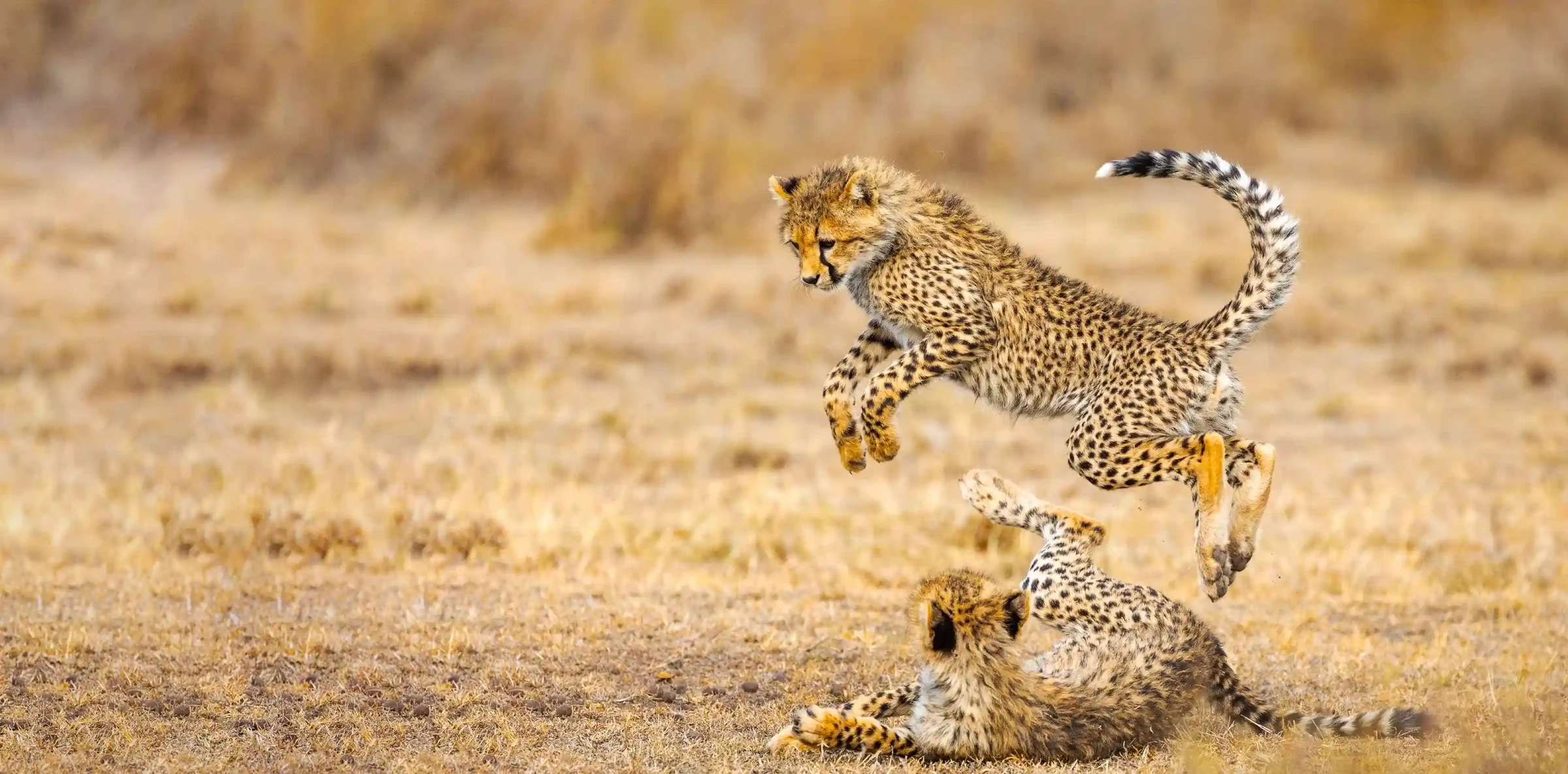
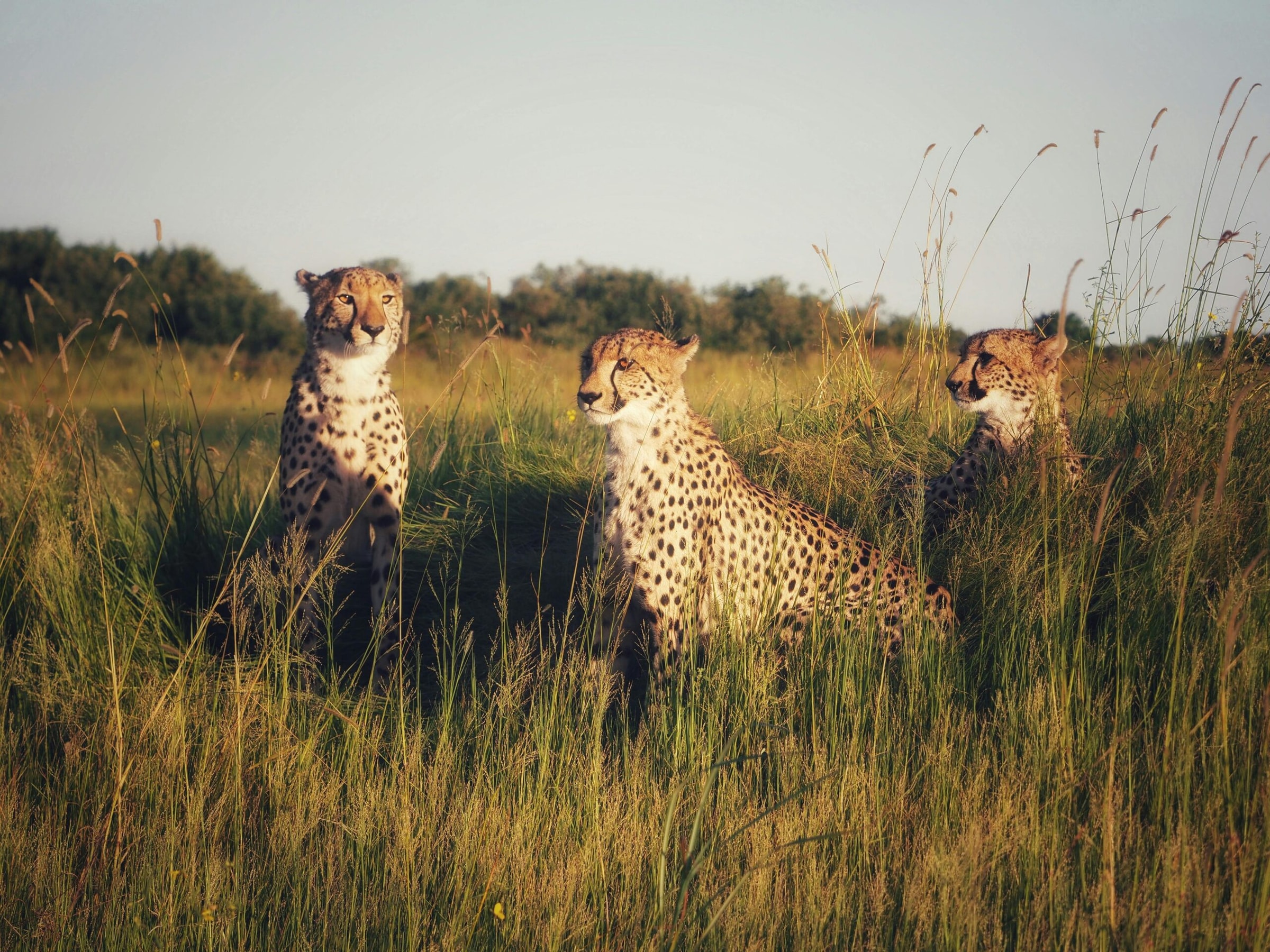
Cheetah (Acinonyx jubatus)
- Speed: Fastest land animal; 0-100 km/h in 3 seconds; top speed 120 km/h
- Best Places: Serengeti plains, Ngorongoro Crater
- Hunting: Daytime hunters (avoid lions/hyenas); 50% success rate
- Physical Features: Black "tear marks," non-retractable claws, lightweight build
- Vulnerability: Often lose kills to lions/hyenas; cubs have 90% mortality rate
Spotted Hyena (Crocuta crocuta)
- Misunderstood: Skilled hunters (70% of food from hunting, not scavenging)
- Bite Force: Strongest of any mammal; can crack elephant bones
- Social Structure: Matriarchal clans; females larger/dominant
- Intelligence: Problem-solving abilities rival primates
- Communication: Famous "laugh" plus 11+ other vocalizations
- Best Places: Serengeti, Ngorongoro, everywhere prey exists
African Wild Dog (Lycaon pictus)
- Conservation: Endangered; only ~6,600 left in Africa
- Hunting: Highest success rate of any African predator (80%+)
- Pack Structure: Cooperative; only alpha pair breeds
- Unique Features: No two dogs have same coat pattern; four toes (not five)
- Best Places: Ruaha, Selous/Nyerere, southern Serengeti (rare)
- Social Behavior: Care for sick/injured pack members; puppies eat first
Herbivores: The Grazers & Browsers
Wildebeest (Connochaetes taurinus)
- Population: 1.5+ million in Serengeti ecosystem
- Great Migration: Annual 800km circular migration
- Calving: 500,000 calves born in 2-3 weeks (January-February)
- Appearance: "Built from spare parts" - horse tail, ox head, goat beard
- Behavior: Herd animals; safety in numbers; synchronized calving
Zebra (Equus quagga)
- Population: 200,000+ in Tanzania
- Stripes: Unique to each individual (like fingerprints); debate over function
- Migration: Second-largest migrating population after wildebeest
- Social Structure: Harems with one stallion, multiple mares
- Communication: Barks, brays, facial expressions
Giraffe (Giraffa)
- Height: Tallest mammals; males 5.5m, females 4.5m
- Subspecies in Tanzania: Masai giraffe (endangered)
- Unique Features: 45cm tongue, same number neck vertebrae as humans (7)
- Feeding: Browse acacia trees; prehensile tongue strips leaves
- Social: Loose herds; complex social networks
Hippopotamus (Hippopotamus amphibius)
- Danger: Kill more humans than any other large animal in Africa
- Weight: 1,500-1,800kg; third-largest land mammal
- Behavior: Spend days in water, graze at night (can walk 10km)
- Territory: Bulls extremely territorial in water
- Best Places: Serengeti (Retina Hippo Pool), Selous/Nyerere (Rufiji River), Katavi
Antelopes: Graceful Grazers
Impala (Aepyceros melampus)
- Most Common: Often called "McDonald's of the bush" (abundant prey)
- Population: Hundreds of thousands in Tanzania
- Jumping: Can leap 3m high, 10m long
- Males: Lyre-shaped horns (50-90cm); females hornless
Grant's & Thomson's Gazelle
- Speed: Thomson's gazelle 80-90 km/h
- Stotting: Jumping behavior signals fitness to predators
- Distinction: Grant's larger with longer horns; different stripe patterns
Eland, Kudu, Waterbuck, and More
- Eland: Largest antelope (900kg); surprisingly jumps 2.5m
- Greater Kudu: Spectacular spiral horns (males); browsers
- Waterbuck: White ring on rump; always near water
- Oryx: Long straight horns; desert-adapted; rare in Tanzania
Primates
Chimpanzee (Pan troglodytes)
- Population in Tanzania: ~2,000 (Mahale + Gombe)
- Intelligence: Use tools, self-aware, 98.8% DNA with humans
- Social: Communities 20-150 individuals; complex politics
- Best Places: Mahale Mountains, Gombe Stream
Baboons & Monkeys
- Olive Baboon: Most common; complex social hierarchies
- Vervet Monkey: Black face, white fringe; alarm calls for different predators
- Blue Monkey: Not actually blue; forest-dwelling
- Colobus Monkeys: Black and white; leaf-eaters; spectacular jumpers
Birds of Tanzania
Tanzania has 1,100+ bird species - more than any other East African country.
Notable Species
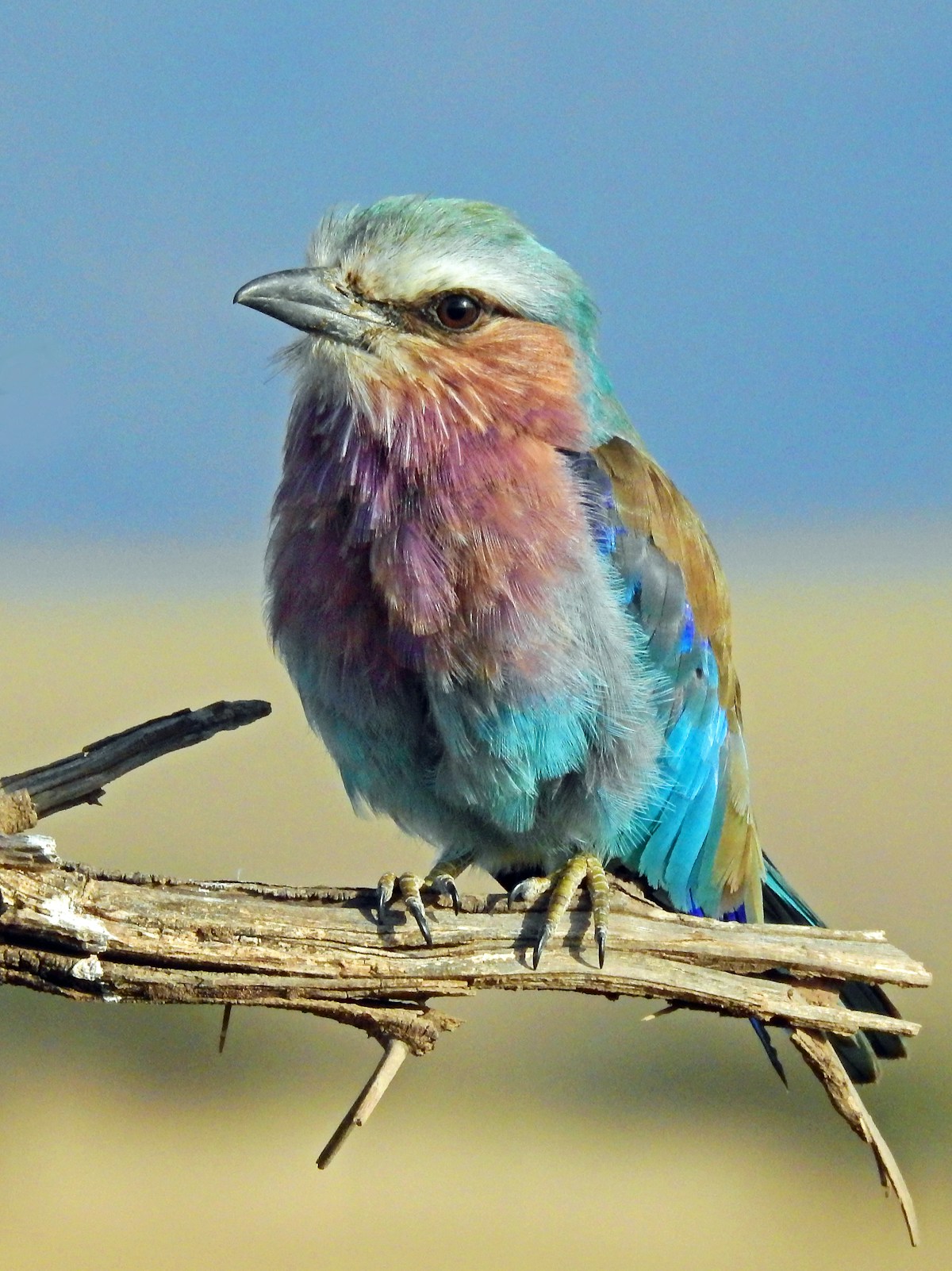
- Lilac-breasted Roller: Tanzania's unofficial national bird; spectacular colors
- Secretary Bird: Unique ground-hunting raptor; kills snakes
- Kori Bustard: World's heaviest flying bird (can reach 20kg)
- Crowned Crane: Elegant; golden crown of feathers
- African Fish Eagle: Iconic call; fish specialist
- Flamingos: Millions in Rift Valley lakes; feed on algae
- Ostrich: World's largest bird; males black, females brown
Where to Find Specific Animals
For Big Cats (Lions, Leopards, Cheetahs)
- Best: Serengeti (Seronera Valley), Ngorongoro Crater
- Good: Tarangire, Ruaha, Lake Manyara
For Elephants
- Best: Tarangire (massive herds), Ruaha (big bulls)
- Good: Serengeti, Selous/Nyerere, Katavi
For Black Rhinos
- Best: Ngorongoro Crater (almost guaranteed)
- Possible: Serengeti (very rare), Mkomazi
For Wild Dogs
- Best: Ruaha, Selous/Nyerere
- Possible: Southern Serengeti, Tarangire
For Chimpanzees
- Only: Mahale Mountains, Gombe Stream
Wildlife Behavior by Time of Day
Dawn (5:30-8:00 AM)
- Predators often still active (finishing night hunts)
- Best time for cat sightings
- Animals moving to water
- Birds very active
Midday (10:00 AM-3:00 PM)
- Most animals rest in shade
- Look for leopards in trees
- Hippos in water
- Elephants often at waterholes
Late Afternoon/Dusk (3:30-6:30 PM)
- Animals become active again
- Predators start hunting
- Excellent photography light
- Herbivores graze before nightfall
Night (7:00 PM-5:30 AM)
- 70% of predator hunting occurs at night
- Nocturnal species active (genets, civets, bush babies)
- Night drives reveal different wildlife
Conservation Status: What You Need to Know
Critically Endangered
- Black Rhinoceros (poaching crisis)
Endangered
- African Wild Dog (habitat loss, disease)
- Chimpanzee (habitat loss)
- African Elephant (poaching, despite population numbers)
Vulnerable
- Lion (habitat loss, human-wildlife conflict)
- Leopard (habitat loss)
- Cheetah (small population, genetic issues)
Safari Etiquette for Wildlife Viewing
- Keep Quiet: Loud noises disturb animals and ruin experience for others
- Stay in Vehicle: Only exit when guide says it's safe
- Don't Feed Animals: Dangerous and disrupts natural behavior
- Respect Space: Don't pressure guides to get too close
- No Flash Photography: Disturbs nocturnal animals, stresses wildlife
- Pack Out Trash: Leave no trace
- Be Patient: Best sightings come to those who wait
Increasing Your Chances of Great Sightings
- Spend More Time: Longer safaris = more sightings
- Visit Multiple Parks: Different ecosystems, different animals
- Go in Dry Season: Animals concentrate at water sources
- Early Morning Drives: Most active time for predators
- Hire Expert Guides: Knowledge dramatically improves sightings
- Be Patient & Lucky: Wildlife is wild - no guarantees!
Ready to Spot Tanzania's Wildlife?
Book your safari with our expert guides who know animal behaviors, seasonal movements, and the best spots for incredible wildlife encounters. We'll maximize your chances of unforgettable sightings!